All ArticlesWater Leak Detection Smart Home 2026: How a $35 Sensor Prevents $12,000 in Damage — Complete Setup Guide With Placement Map, Sensor Comparison & Abode Integration
 Abode March 15, 2026
 Water damage is the most common — and most expensive — home insurance claim in America. The Insurance Information Institute reports the average water damage claim costs $12,514, and most standard home security systems completely ignore it. A single burst pipe, forgotten running faucet, or slow washer leak can cause tens of thousands in damage before you even notice.
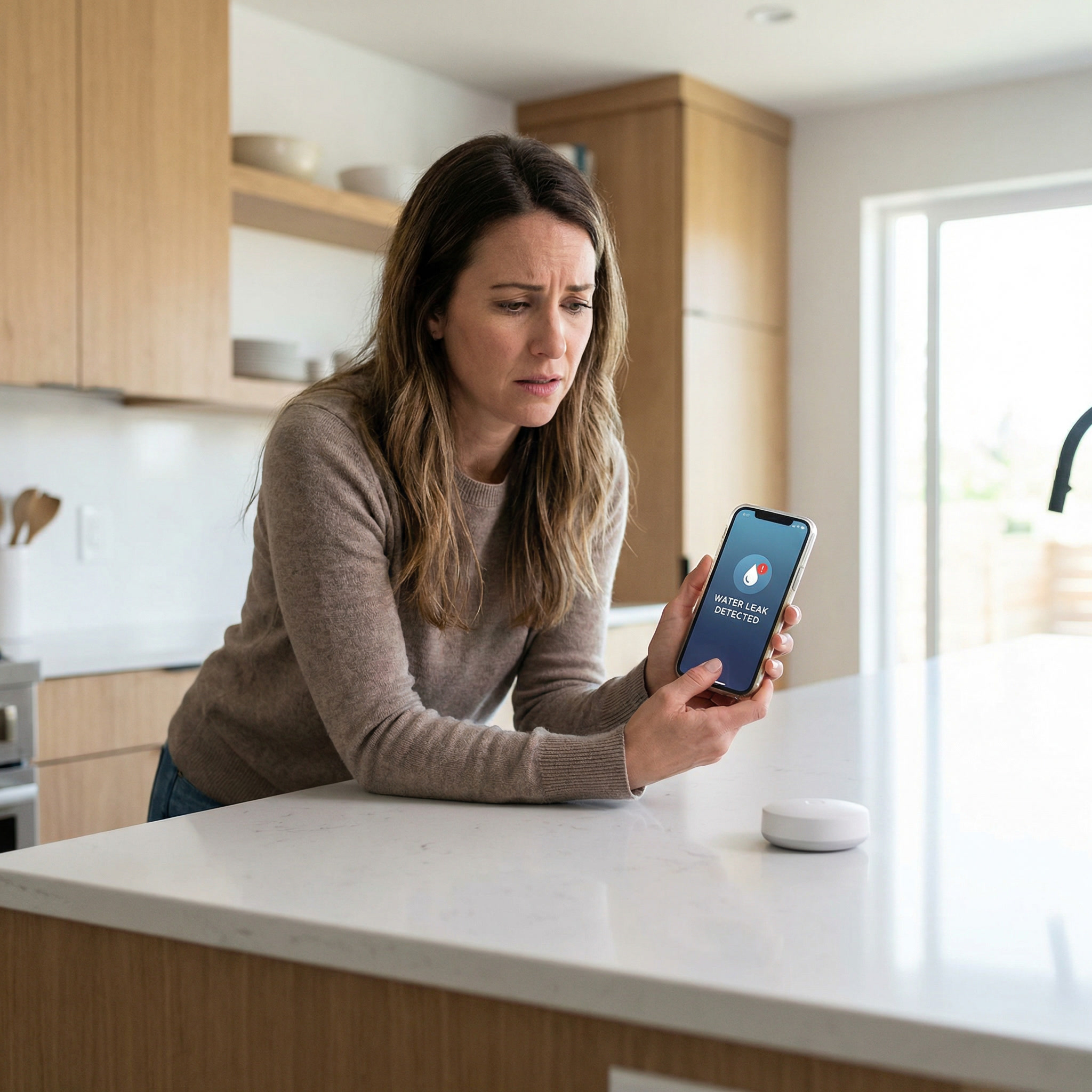
Smart water leak sensors change the equation. For as little as $20-$35 per sensor, you get instant smartphone alerts the moment water appears where it should not — giving you minutes to act instead of hours (or days) of unchecked flooding.
Here is how to build a complete water leak detection system into your smart home, which sensors to buy, where to place them, and how to integrate everything with your existing Abode security system for whole-home protection.
Why Water Leak Detection Belongs in Every Smart Home
Most homeowners focus on break-ins when they think about home security. But the numbers tell a different story:
| Threat | Average Cost | Annual US Incidents | Detection Time |
|---|
| Burglary | $2,661 | 1.4 million | Immediate (alarm) |
| Water damage | $12,514 | 14,000+ claims/day | Hours to days without sensors |
| House fire | $77,340 | 350,000 | Seconds (smoke detector) |
Water damage costs nearly 5x more than burglary per incident, and happens far more frequently. Yet most homes have zero water leak detection. A comprehensive smart home security setup should protect against all three threats — and systems like Abode can integrate leak sensors alongside intrusion detection and smoke alarms in a single app.
Where to Place Water Leak Sensors (The 8 Critical Spots)
- Under the kitchen sink — The most common leak source. Garbage disposal connections, supply lines, and drain fittings all fail eventually.
- Behind the washing machine — Washer supply hoses are the #1 cause of catastrophic home flooding. Rubber hoses degrade and burst with no warning.
- Near the water heater — Water heaters have a 10-15 year lifespan. When they fail, they dump 40-80 gallons onto your floor.
- Under bathroom sinks and toilets — Slow toilet seal leaks can run for weeks undetected, warping subfloors and breeding mold.
- Near the sump pump — If your sump pump fails during heavy rain, a sensor gives you critical minutes to respond before the basement floods.
- Under the refrigerator — Ice maker supply lines are notorious for slow, hidden leaks that damage flooring.
- Near HVAC condensate lines — Clogged AC drain lines overflow silently, often in attics or closets where you will not notice.
- In the basement/crawl space — Groundwater seepage and foundation cracks show here first.
Best Water Leak Sensors for Smart Homes (2026)
| Sensor | Price | Protocol | Battery Life | Works With |
|---|
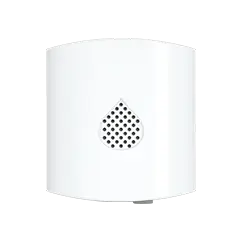
| Abode Water Leak Sensor | $35 | Z-Wave | 2+ years | Abode hub, HomeKit (via Abode), Alexa, Google |
| Samsung SmartThings Water Leak | $25 | Zigbee | 2 years | SmartThings hub, Alexa, Google |
| Aqara Water Leak Sensor T1 | $20 | Zigbee | 3+ years | Aqara hub, HomeKit, Alexa, Google |
| Govee Wi-Fi Water Sensor | $12 | Wi-Fi | 2 years | Govee app, Alexa, Google |
| Flo by Moen Smart Water Detector | $50 | Wi-Fi | 2 years | Flo app, Alexa, Google |
Our recommendation: The Abode Water Leak Sensor is the best choice if you already have an Abode system — it integrates directly into your security hub, sends alerts through the same app as your intrusion sensors, and can trigger CUE automations (like turning on lights or sending custom notifications). Plus, if you are on the Connect+ plan, your monitoring center receives water leak alerts alongside break-in alerts.
How to Integrate Leak Sensors with Your Abode System
If you already have an Abode Smart Security Hub, adding water leak detection takes about 5 minutes per sensor:
- Open the Abode app and tap Add Device
- Select Water Leak Sensor from the device list
- Follow the pairing prompts — the sensor connects via Z-Wave
- Name the sensor by location (e.g., “Kitchen Sink Leak Sensor”)
- Set up a CUE automation — for example: “If water detected AND system is armed-away, send push notification + turn on kitchen lights + trigger siren”
The sensor appears alongside your door/window sensors, motion sensors, and cameras in the Abode app — giving you a single dashboard for your entire home security ecosystem.
Smart Shutoff Valves: The Ultimate Water Damage Prevention
Leak sensors detect water. Smart shutoff valves prevent damage. These devices install on your main water supply line and can automatically cut water flow when a leak is detected:
- Flo by Moen — $500 installed. Monitors water pressure for micro-leaks. Auto-shutoff capability.
- Phyn Plus — $700 installed. AI-powered leak detection at the main line. Works with HomeKit.
- Dome Shut-Off Valve — $70 + installation. Z-Wave compatible. Can be triggered by Abode CUE automations via Z-Wave.
Pairing a shutoff valve with Abode leak sensors creates a fully automated system: sensor detects water → CUE automation triggers → shutoff valve closes → you get a notification. Total damage: minimal.
Water Leak Detection vs. No Detection: Cost Comparison
| Scenario | Without Sensors | With Smart Sensors |
|---|
| Burst washing machine hose (away for weekend) | $15,000-$50,000+ in damage | $200-$500 (caught in minutes) |
| Slow toilet seal leak (undetected 3 months) | $3,000-$8,000 (mold + subfloor) | $0-$100 (caught same day) |
| Water heater failure | $5,000-$15,000 | $500-$1,500 (early shutoff) |
| Frozen pipe burst (winter) | $10,000-$30,000 | $1,000-$3,000 (immediate response) |
A $35 sensor can prevent $15,000+ in damage. That is a 428x return on investment — better than any stock pick.
Insurance Benefits of Water Leak Detection
Many home insurance companies now offer 5-15% premium discounts for homes with smart water detection systems. Some insurers specifically list qualifying devices:
- State Farm and Allstate offer premium discounts for homes with monitored leak detection
- Some policies require water detection for full coverage of water damage claims
- The discount often pays for the sensors within the first year
Combined with the insurance discount you may already get from your Abode monitored security system, total insurance savings can exceed $300/year.
Frequently Asked Questions
Do water leak sensors work without a smart home hub?
Wi-Fi sensors like Govee work standalone with just their app. Z-Wave sensors (like the Abode Water Leak Sensor) require a compatible hub but offer better battery life, more reliable connections, and integration with your full security system.
How long do water leak sensor batteries last?
Most sensors last 2-3 years on a single battery. The Abode sensor uses a standard CR123A battery. The sensor will alert you when the battery is low — well before it dies.
Can water leak sensors detect slow leaks?
Floor-mounted sensors detect water when it reaches them — so they catch any leak that produces standing water. For micro-leaks in pipes before water reaches the floor, you need a main-line monitor like Flo by Moen or Phyn Plus.
Will my Abode system call the fire department for water leaks?
Water leak alerts are treated as environmental alerts, not emergency dispatch events. Your Abode monitoring center will notify you immediately, but will not dispatch emergency services for water. You can set up CUE automations to trigger the siren, turn on lights, and send multiple notifications.
How many water leak sensors do I need?
At minimum, 3-4 sensors covering: under kitchen sink, behind washing machine, near water heater, and near the sump pump or lowest point. For comprehensive coverage, 6-8 sensors covering all the spots listed above. At $35 each, full coverage costs $105-$280 — a fraction of one water damage claim.
Do water leak sensors work in freezing temperatures?
Most sensors operate from 32°F to 104°F (0°C to 40°C). For unheated spaces like garages or crawl spaces, check the specific sensor’s temperature range. The Abode sensor works in this standard range.



 April 03, 2026 SimpliSafe vs Abode 2026: We Compared Plans, Pricing, Smart Home, and 3-Year Costs — One System Saves You $504
  Abode SimpliSafe and Abode are the two most popular DIY home security systems in 2026. Both skip long-term contracts, both install in under an hour, and both offer professional monitoring....